Western Queensland councils demand aviation reset as regional air services spiral
The Western Queensland Alliance of Councils (WQAC) has issued an urgent call for a national "reset" of the regional aviation model, warning that the current system is failing remote communities, councils, and operators alike.
Commissioner Martin Stokie, Lead Commissioner for the Productivity Commission’s Inquiry into the Determinants of Regional Airfares
Speaking at the WQAC Assembly 2026 at Brisbane City Hall, local government leaders, aviation operators, and policy experts warned that soaring costs, dwindling aircraft supply, and unsustainable funding models are creating a "downward spiral" that threatens the prosperity of rural and remote communities.
The discussion was sparked by early insights shared by Commissioner Martin Stokie, Lead Commissioner for the Productivity Commission’s Inquiry into the Determinants of Regional Airfares.
Commissioner Stokie provided an update on the progress of the landmark inquiry, which commenced late last year. Backed by a relatively generous timeline to ensure a thorough analysis, the Commission is scheduled to release its draft report for public feedback in November, with the final report and recommendations due to be handed to the federal government in April of next year.
The Commission’s initial consultation phase, captured in its "What We Heard" document, highlighted a stark disconnect between metropolitan aviation and the essential service reality of remote routes.
Commissioner Stokie confirmed that regional airfares are significantly higher than those in major cities, describing remote aviation as a "high-cost, low-volume service" where competition is limited.
To get to the heart of why regional airfares remain so high, the Commission has undertaken an unprecedented route-by-route data collection process, securing highly sensitive financial and volume data directly from cooperative airlines.
"Nobody has ever really been able to do any close look at individual profitability by individual routes," Commissioner Stokie said.
"We have that data ... and our thinking at this point is that we want to try to group routes in an aggregated way that have like characteristics."
To protect commercial confidentiality, the Commission will segment the market into distinct categories, such as "short regional" routes under 1000km where driving is a viable alternative, versus "short remote" routes where aviation is the only reliable lifeline.
Commissioner Stokie revealed that the feedback from regional residents, airlines, and local councils has painted a clear picture of a system under immense strain:
Residents’ need:
While general connectivity is valued, remote residents consistently prioritise travel for critical healthcare, family emergencies, and education.
"The submissions will often highlight that kind of need for travel at the highest level... where people are quite exposed and they need to travel, but the cost of that travel is particularly high," Commissioner Stokie noted.
The burden of "gifted" airports:
Local councils are struggling to maintain airports that were handed to them by the federal government decades ago.
"We can see here a number of councils who said it was a poison chalice taking on the airports in the first instance. They think it was a great asset and then are lumped with all the costs,” Commissioner Stokie said.
One-size-fits-all policy failures:
The Commission warned that treating remote aviation the same as major metropolitan routes is a fundamental policy error.
"The policy area that we observe here is that it tends to treat aviation as a one-size-fits-all," Commissioner Stokie said, pointing to costly federal security and screening mandates that are financially impossible for small airports to absorb. "A more coordinated program would lead to better outcomes for the residents in these areas."
Rob Walker, CEO of the Regional Aviation Association of Australia (RAAA), highlighted the severe financial pressures facing regional operators.
Mr Walker said airline profit margins could be as low as 1.74 per cent, while fuel was now accounting for 30 to 40 per cent of running costs for some regional operators.
"We are at the point where something needs to change," Mr Walker told the WQAC Assembly. "By doing it the way we're doing it at the moment, it's just not working. Regional aviation must be recognised and funded as an essential service."
Adding to the crisis is a critical shortage of mid-sized aircraft. Traditional passenger planes servicing remote routes are ageing and out of production, forcing operators to choose between much larger or much smaller aircraft.
For Western Queensland’s local governments, the aviation crisis is a double-edged sword. Many councils own and maintain local airports – assets originally gifted by the federal government – but lack the rate base to support them.
"Our RPT (Regular Public Transport) services are a community service," said Andrew Martin, Mayor of Blackall-Tambo Regional Council. "It costs our council about $750,000 a year just to run our airport. We cannot fix this as local government because it is costing us money now. It has to come from the leaders from above."
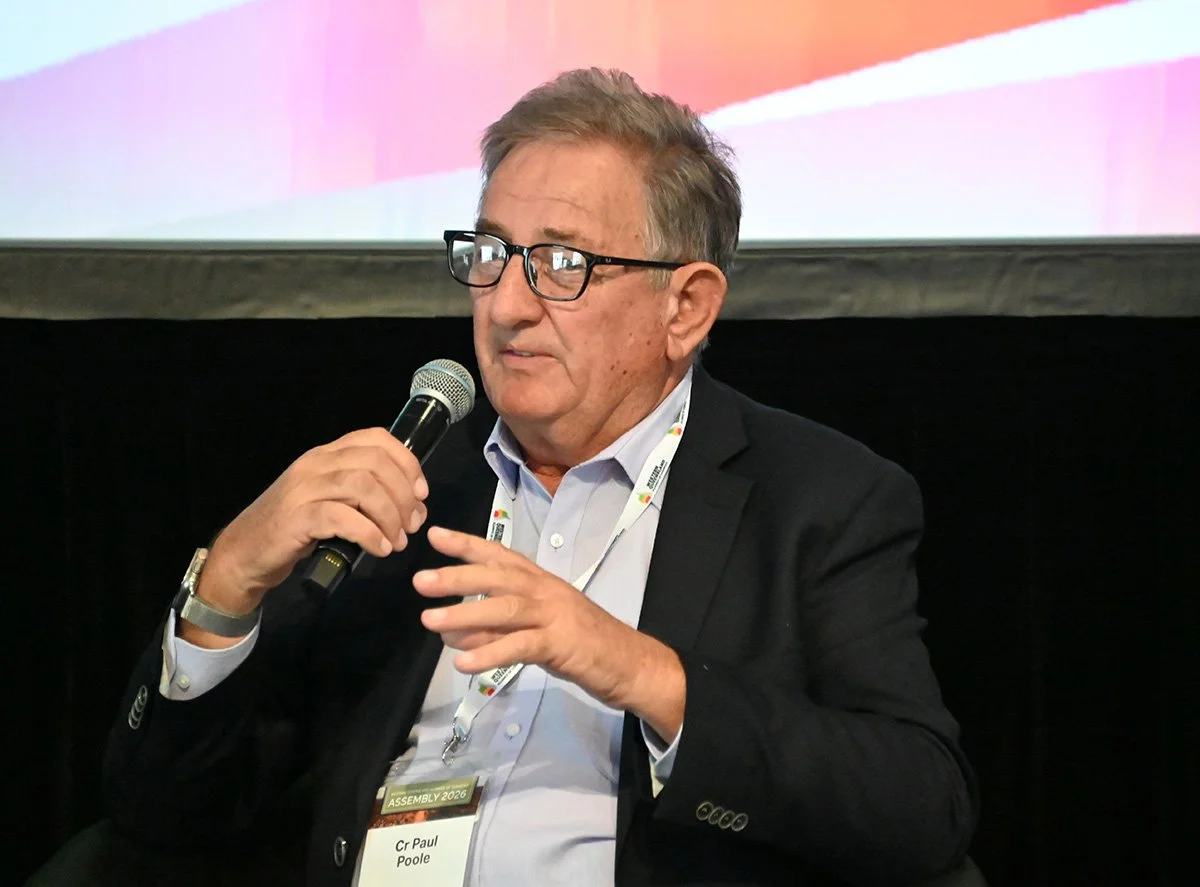
"We don't need one airline; we need one reliable service. The model has to change." Cr Paul Poole, Burke Shire Council and co-owner, Savannah Aviation
Councillor Paul Poole of Burke Shire Council and co-owner of Savannah Aviation echoed these concerns, pointing out that 35 years of the current model has failed to deliver stability. "We don't need one airline; we need one reliable service. The model has to change."
Furthermore, standard 50 per cent co-contribution requirements for federal airport infrastructure grants remain completely out of reach for small councils facing multi-million-dollar runway upgrades.
At the WQAC Assembly, the Department of Transport and Main Roads (TMR) acknowledged the frustration of the councils.
Dean Helm, Deputy Director General of Network Services & Operations, revealed that TMR’s recent engagement on regulated routes received an "absolutely phenomenal" 4000 individual feedback responses, highlighting the deep concern over regional connectivity.
With Queensland's regulated airline service contracts recently extended to December 31, 2027, Mr Helm said TMR was committed to working directly with WQAC’s regional groups (NWQROC, RAPAD and SWQROC) to explore interim measures and long-term procurement solutions.
The Western Queensland Alliance of Councils is calling on the State and Federal Governments to abandon "one-size-fits-all" aviation policies and establish a coordinated, stratified program that:
Recognises regional aviation and local airports as critical, essential infrastructure for healthcare, education, and disaster management.
Provides targeted, non-contributory capital funding to maintain and upgrade council-owned airstrips.
Reforms the regulated route framework to build capacity and lower airfares, ensuring remote residents are not priced out of essential travel.
"When a business class seat from Brisbane to Dubai is cheaper than an economy seat from Blackall to Brisbane, the system is inherently broken," Mayor Martin concluded.
"We need to build capacity to make travel affordable, and we must work together across all three levels of government to fix it."
-ENDS-
Greg Hoffman PSM, Executive Officer, WQAC - E: greg.hoffman@wqac.com.au, M: 0418 756 005