New study reveals state of housing in Western Queensland: Local leaders ready to step up to tackle the challenge
Leaders representing the 22 councils of Western Queensland, covering 60% of the State, have released a first region-wide Housing Market Study today. The Study reveals the region’s chronic shortage of housing - a major roadblock to community, employment and business growth that is only set to worsen.
United as the Western Queensland Alliance of Councils (WQAC), the group commissioned the Regional Australia Institute (RAI) to develop the WQAC Housing Solutions Study – To Build and Grow the Potential of Western Queensland to understand and quantify issues with housing throughout the region, and ultimately identify solutions that best meet the region’s needs.
Longreach Mayor and RAPAD Chair Tony Rayner said sourcing affordable and suitable housing, finance and trades for renovations and works, was proving to be a major roadblock in a region that’s ripe with potential.
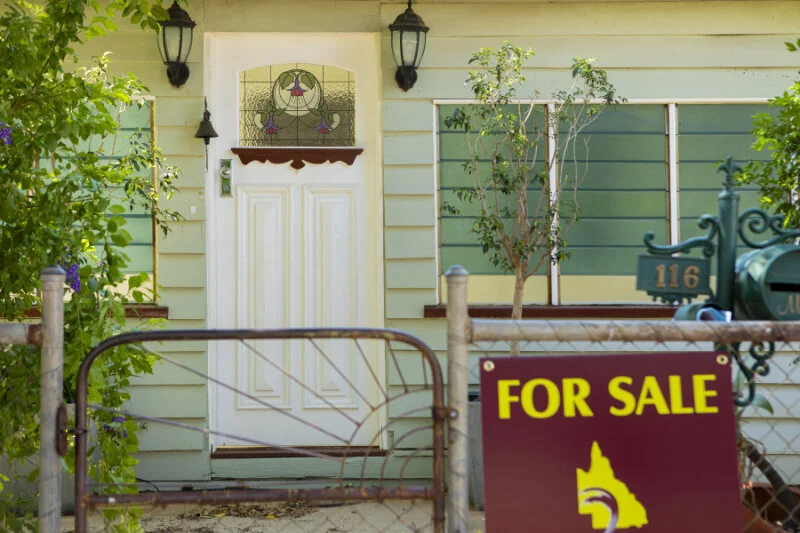
“While there are still for sale signs in yards across the region, it’s the quantity and quality of available housing that is not keeping pace with market demands and has existed for some time”
“Western Queensland is a great place to live and work and there are many opportunities to kick start or advance careers, business and industry.
“While there are still for sale signs in yards across the region, it’s the quantity and quality of available housing that is not keeping pace with market demands and has existed for some time. The current COVID-19 environment has further highlighted its significance as well as its adverse impact across our communities and businesses,” Mayor Rayner said.
The study has identified the severity of the issue including a shortfall in housing across the region at 1,480 dwellings. On top of that, council-supplied housing needs to increase by 296 dwellings, and 248 council-owned dwellings need major refurbishment.
The underinvestment in housing in the region is also significant. The per-capita level of investment into housing in Western Queensland is less than one fifth of what occurs in Greater Brisbane. That is, over the three years to June 2020 the average value of approved residential building work – whether new home building or renovation work – was a mere $320 per capita across the 22 LGAs that make up the WQAC region. In Greater Brisbane it was $2,675.
Balonne Mayor Samantha O’Toole and SWQROC Chair said that housing, along with other infrastructure deficits such as roads, water, energy and digital connectivity, has emerged as a key barrier to Western Queensland fulfilling and growing its economic and social potential.
“We want to ensure we can support our communities and attract new people, business and investment to the region. There are jobs going unfilled in Western Queensland simply due to a lack of suitable housing.
“With the current environment and more Australians look to ‘move to more’ in regional Australia, we are in a prime position to capitalise on our many assets. The chronic shortage of housing is a major barrier to the success and growth of our communities, employment and businesses,” Mayor O’Toole said.
Carpentaria Mayor Jack Bawden and NWQROC Chair said the housing situation in the west has a far-reaching impact beyond the region’s boundaries.
“The lack of growth in our region also constrains the growth potential of the State and Nation which relies on the productivity of regions such as Western Queensland to generate wealth for re-distribution. If we’re to keep up our contribution, something needs to change.”
“We’re in a great position to tackle this issue with all 22 councils in agreement across two thirds of the state ready to work with all levels of government, the private sector and our communities. And we’ve now got the Housing Study behind us as an important first step that clearly shows what’s going on, identifies possible solutions and opens the door to more input and support so we can get on with the job,” Mayor Bawden said.
RAI Chief Economist Dr Kim Houghton said more people than ever before are looking at a life in regional Australia and providing the diversity of housing they’re looking for presents an enormous opportunity for regional towns and cities.
“The RAI uncovered that half the demand for housing in Western Queensland is for townhouses and apartments which opens up the door for new investment opportunities for builders and developers. In turning this housing challenge around, we look forward to continuing our work on the issue to provide all stakeholders, including government and private investors with options moving forward,” Dr Kim Houghton said.
The WQAC Study began in late March 2021 and has been informed by interviews with key people in each region with an interest in and knowledge of housing markets. The Study interviewed Council planning staff, real estate agents, builders, developers, and financiers (banks, mortgage brokers and valuers) to build a full picture of the sources of the market failure as well as provide insights into suitable solutions.
Through work like our housing study we aim to tackle challenges, identify opportunities and build strong partnerships to deliver solutions that benefit all of Western Queensland.
The WQAC acknowledges the work RAI undertook, going above and beyond in their commitment.
- ENDS –
Media contact:
WQAC – Aleisha Domrow – 0423 116 865
Regional Australia Institute – Dominique Schwartz - 0411 485 747